Drought stress: 8 ways to protect your sports pitch
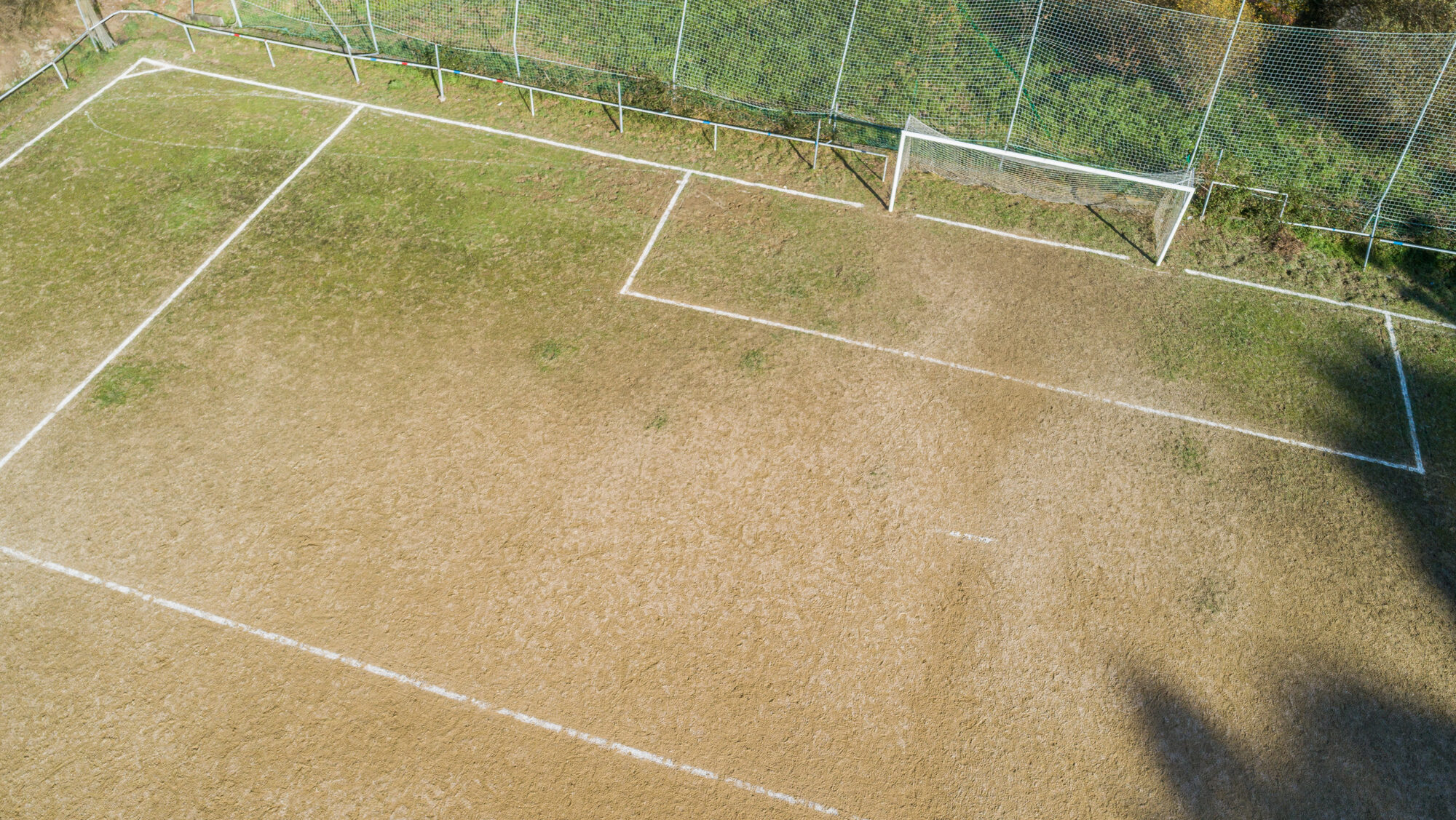
High temperatures, dry conditions and limited irrigation capacity can put significant stress on sports turf. As temperature rises above the optimal level, and with limited water available, growth slows down, and the risk of turf damage and wilting is increasing.
There is no single irrigation strategy that works for every pitch. Soil type, grass species, weather conditions and the condition of the rootzone all influence how turf responds to drought.
The key is to understand what is happening beneath the surface and adjust management accordingly.
Here are eight practical measures that can help grounds teams manage sports turf during periods of drought and extreme heat.
1. Monitor soil moisture before you irrigate
One of the most important factors during drought is knowing how much water is actually available in the rootzone.
Soil moisture should be monitored consistently rather than relying solely on a fixed irrigation schedule. This allows irrigation to be adjusted according to the actual condition of the pitch.
As a general soil moisture guide:
- 18–23%: optimal range
- 13–18%: acceptable, but should be monitored
- Below 13%: increased risk of wilting and turf damage
These figures are guidelines rather than strict limits. The ideal moisture level depends on the rootzone, grass species and local conditions.
Technology such as SGL TurfPods can help grounds teams monitor soil moisture both in real time and over time. Historical data can reveal daily patterns and help identify areas that are more prone to drying out.
If monitoring capacity is limited, areas exposed to direct sunlight for much of the day should receive particular attention.
2. Consider weather conditions when planning irrigation
Irrigation requirements are strongly influenced by evapotranspiration, also known as ET. ET combines water lost through evaporation from the soil and transpiration from the plant.
Hot, sunny and dry conditions increase ET. Wind can increase it further by removing the layer of still, humid air surrounding the leaves.
This means the highest irrigation demand typically occurs when conditions are:
hot + sunny + dry + windy
Rather than following a fixed irrigation programme, grounds teams should consider the current and forecast weather conditions when deciding how much water to apply.
3. Irrigate at the right time
In most situations, irrigation should be carried out in the early morning, ideally around dawn or shortly before sunrise.
At this time, temperatures are lower and evaporation losses are generally limited. The turf canopy can also dry relatively quickly after sunrise, reducing the period of leaf wetness.
Evening irrigation should generally be avoided where possible. Water remaining on the leaves overnight can increase the period of leaf wetness and, consequently, the risk of disease.
If evening irrigation is necessary, it should take place early enough to limit the duration of leaf wetness.
4. Adjust irrigation depth and frequency
Under normal conditions, irrigation should wet the active rootzone rather than only the surface. This encourages the turf to use water from a larger volume of soil and can support deeper root development.
However, the right strategy depends heavily on the rootzone.
Sandy rootzones drain quickly and have relatively low water-holding capacity. Applying too much water at once can cause water to move below the active rootzone before the plant can use it.
During severe drought or extreme heat, smaller and more frequent applications may therefore be more effective, particularly when water availability is limited.
Short, light irrigation cycles can also be used for syringing. Here, the objective is not to increase soil moisture, but to cool the turf canopy through evaporation. Only a small amount of water is required for this purpose.
5. Build a strong root system before drought arrives
The best time to prepare a pitch for drought is before the drought begins.
A healthy and deep root system allows turf to access water from a larger volume of soil. Management practices should therefore focus on maintaining good rooting throughout the season.
Compaction can significantly restrict root development, particularly on intensively used sports pitches. Excessive thatch can also reduce irrigation efficiency by preventing water from entering the soil evenly and encouraging shallow rooting.
Aeration can improve water infiltration, oxygen movement and root development while helping to reduce compaction.
Timing is critical, however. Aggressive aeration during severe drought or extreme heat can increase evaporation and add further stress to the turf. More intensive aeration is therefore best carried out before expected drought conditions or once the weather becomes less stressful.
During severe drought, only low-impact aeration should be considered where there is a clear need.
6. Adjust mowing during prolonged heat
Mowing height can influence drought tolerance.
Where the requirements of the sport and pitch specifications allow, slightly increasing the mowing height during prolonged hot and dry periods can help the plant maintain more leaf area for photosynthesis. This can support carbohydrate production and root development.
Unnecessarily aggressive mowing should therefore be avoided when the plant is already under stress.
A slightly higher mowing height does not necessarily mean significantly higher water loss. A denser turf canopy can reduce air movement around the leaves and may help limit evapotranspiration.
7. Pay attention to wetting agents and nutrition
On sand-based sports pitches, drought can increase the risk of localised dry spots.
As the rootzone dries, certain areas can become water repellent or hydrophobic. Irrigation water may then move through some parts of the profile while bypassing others.
This means that an average soil moisture reading can sometimes look acceptable while individual areas are already becoming too dry.
Wetting agents can help improve the movement and distribution of water through the rootzone, supporting more uniform soil moisture and potentially improving irrigation efficiency.
Fertiliser management is also important during drought. Excessive nitrogen should generally be avoided during periods of high temperature and moisture stress, as it can encourage unnecessary leaf growth and increase water demand.
Potassium plays a role in stomatal regulation and can contribute to drought tolerance. However, additional potassium should only be applied where soil or tissue testing indicates that it is required.
Electrical conductivity, or EC, should also be monitored regularly and kept towards the lower end of the acceptable range.
8. Manage the environment around the pitch
Temperature, humidity and air movement all influence evapotranspiration.
Lower air temperatures and higher humidity generally reduce water loss, while sufficient air movement is important for maintaining a healthy turf environment.
During periods of extreme heat, environmental control can therefore become an important part of the overall strategy.
Solutions such as the SGL TurfCooler can help manage the conditions around the turf and support grounds teams during periods when heat and drought are putting additional pressure on the pitch.
The goal: use every drop efficiently
During drought, the objective is not simply to apply more water. It is to make the best possible use of the water available.
Regular soil moisture monitoring, weather-based irrigation decisions, appropriate irrigation timing and a healthy root system all contribute to more efficient water management.
When conditions become extreme, priorities may also need to change. Maintaining turf survival and playing-surface quality can become more important than encouraging maximum root development.
The most effective drought strategy is therefore not a fixed recipe. It is a data-driven approach that responds to the condition of the turf, the rootzone and the environment.
Monitor. Adjust. Protect the pitch.