Stadium Manager helps Rapid Wien into a new era of modern pitch management
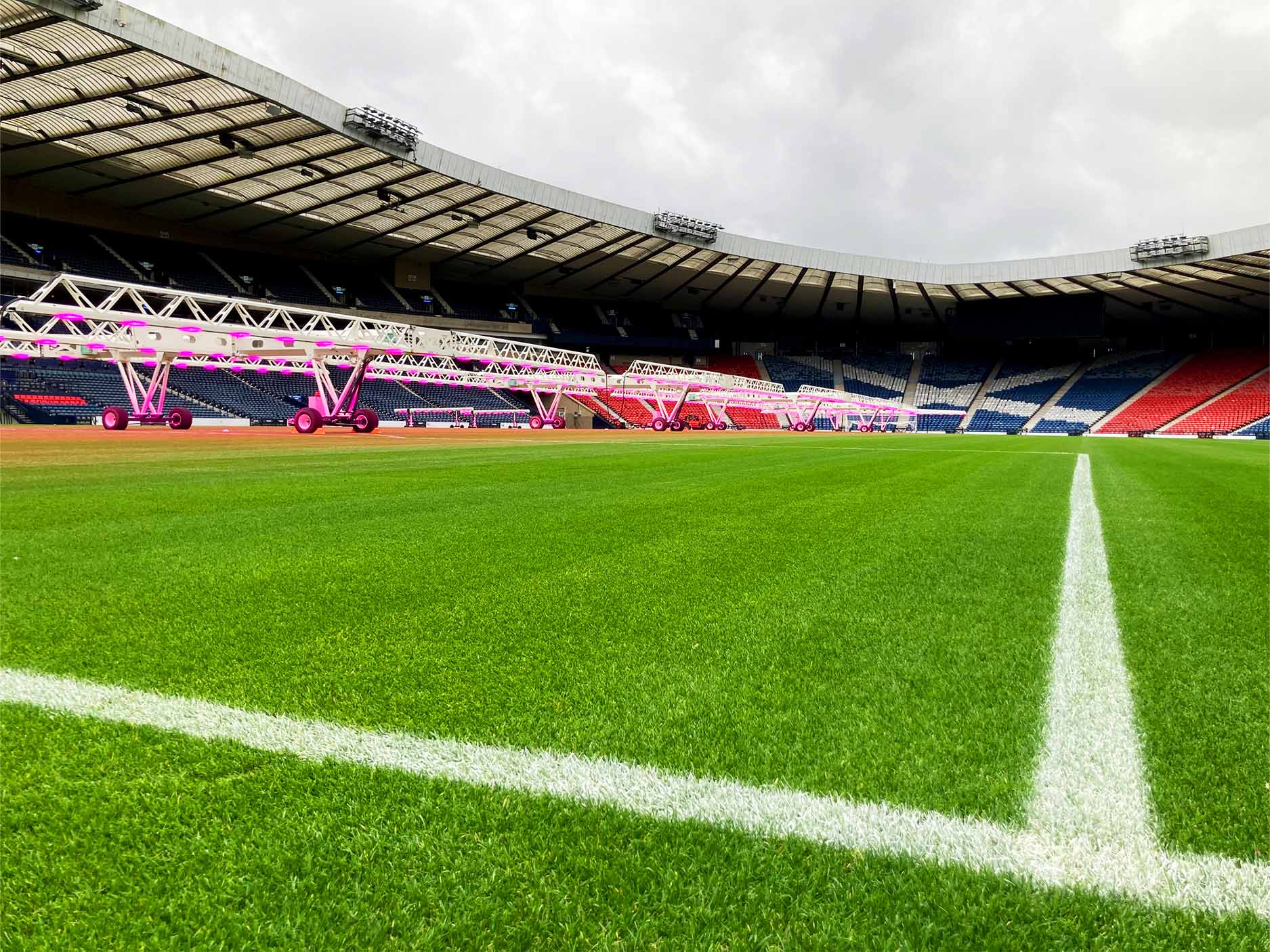
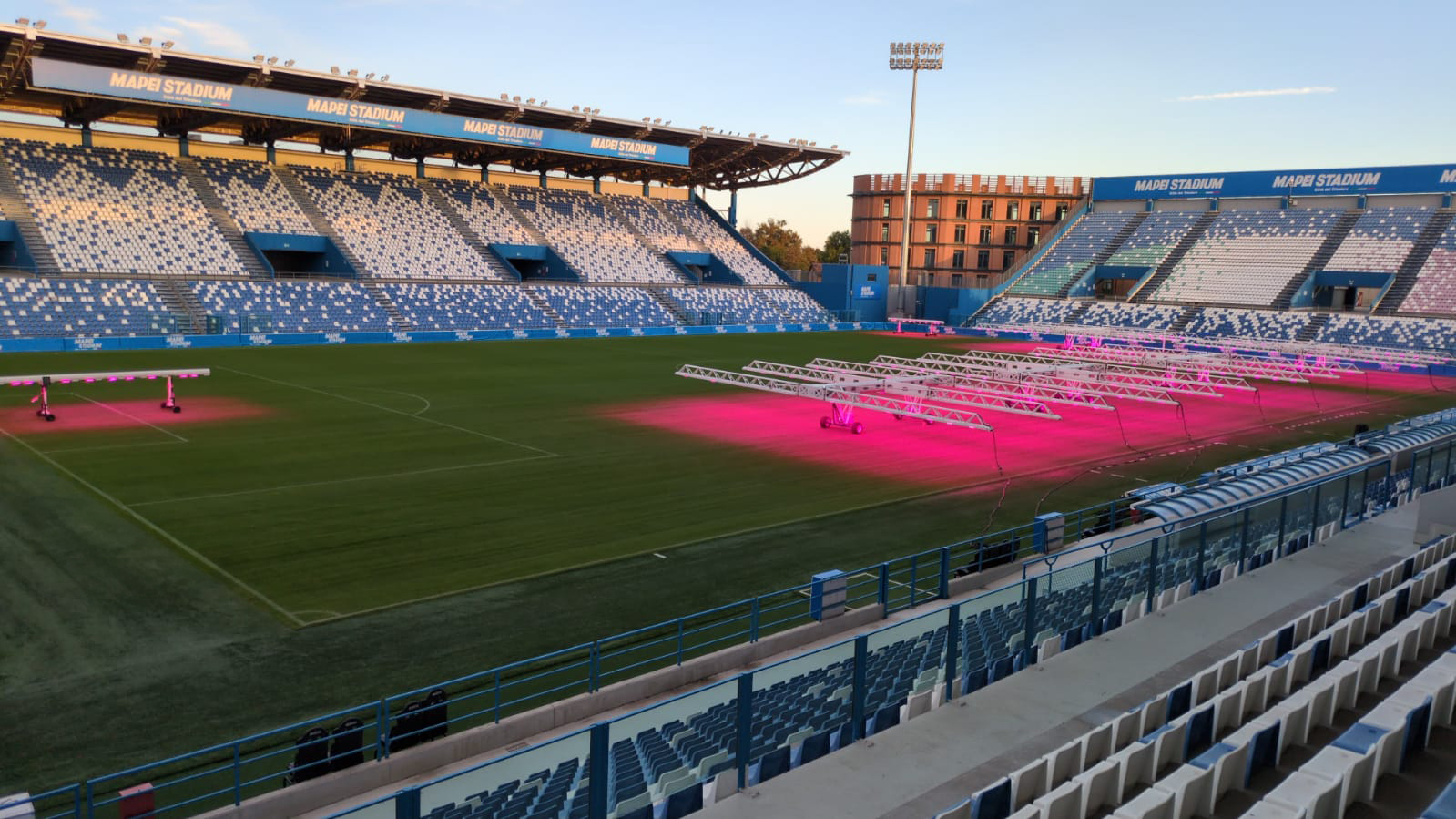
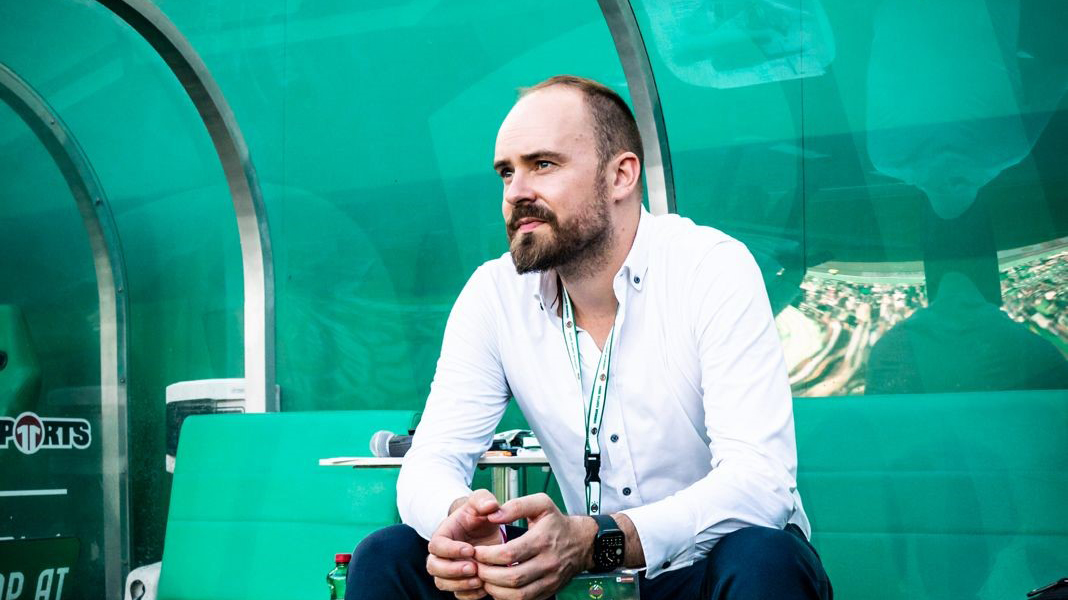
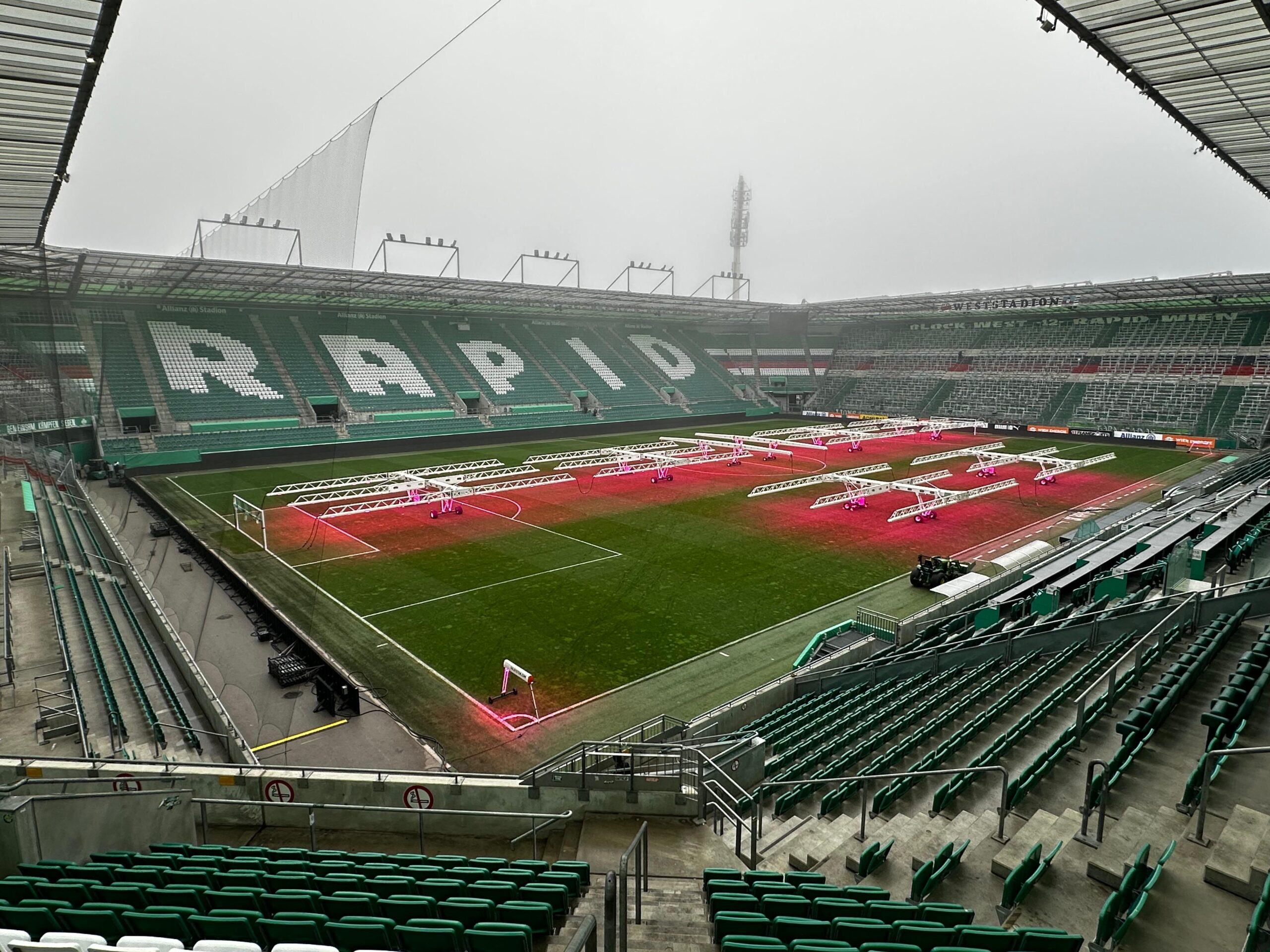
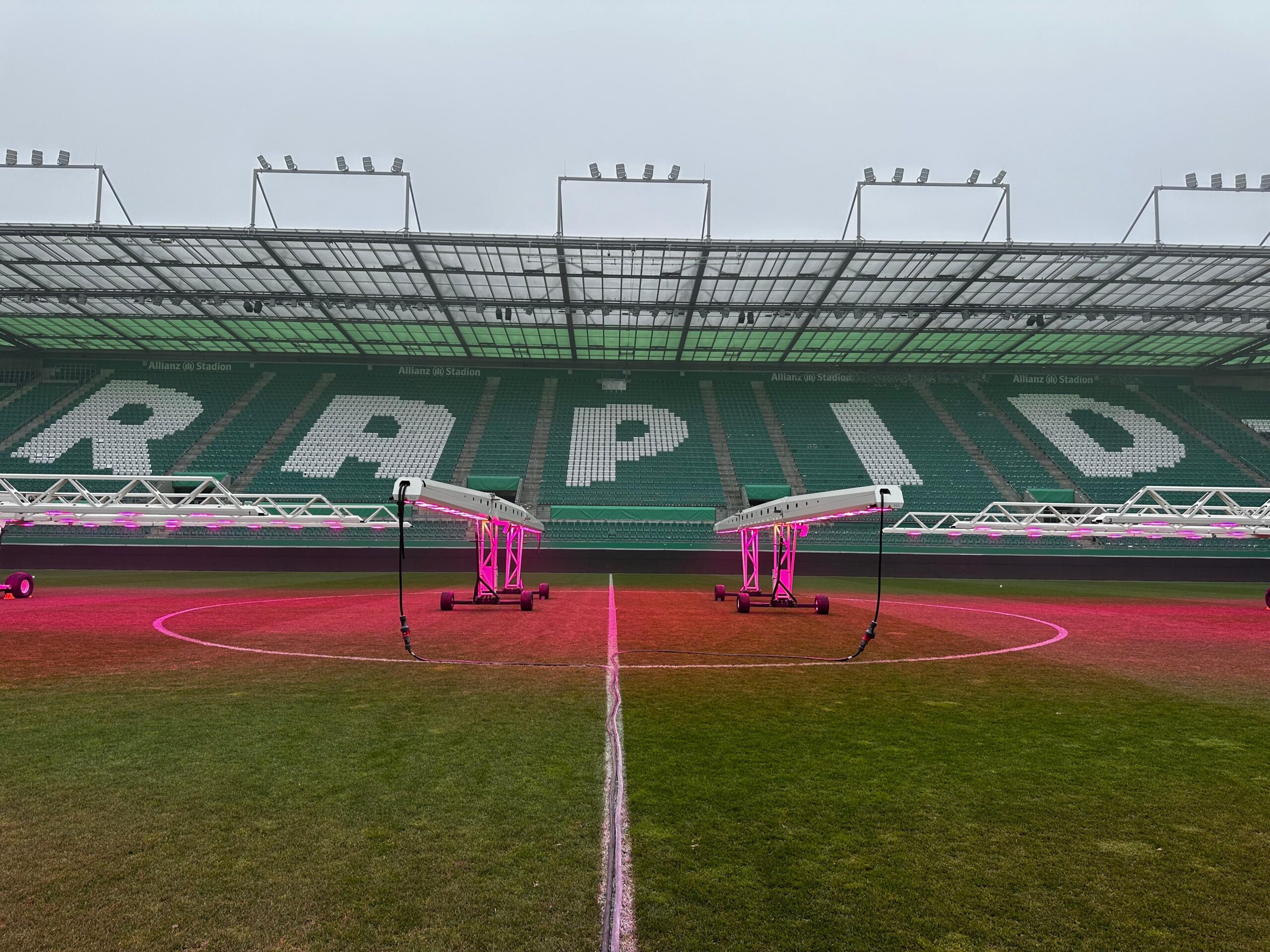
Stadium Manager Johannes Samitz has a clear vision for Rapid Wien’s pitch management. His attention is firmly on long-term development behind the scenes. With a renewed focus on data, sustainability, and modern infrastructure, he is steering the club towards a more efficient and futureproof way of working. One of the most significant recent steps has been the transition from HPS to LED grow lighting, an investment he considers both logical and necessary.
Looking beyond borders
Johannes is not a groundsman, yet his passion for the craft is unmistakable. He travels frequently, visits stadiums across Europe, and maintains close contact with his Head Greenkeeper, Wayne, and with fellow specialists abroad. “I’m really into greenkeeping,” he says. “I want to understand what we do and why we do it. When you look at clubs in Germany and the UK, they are already several steps ahead. I want Rapid Wien to move in that direction too.”
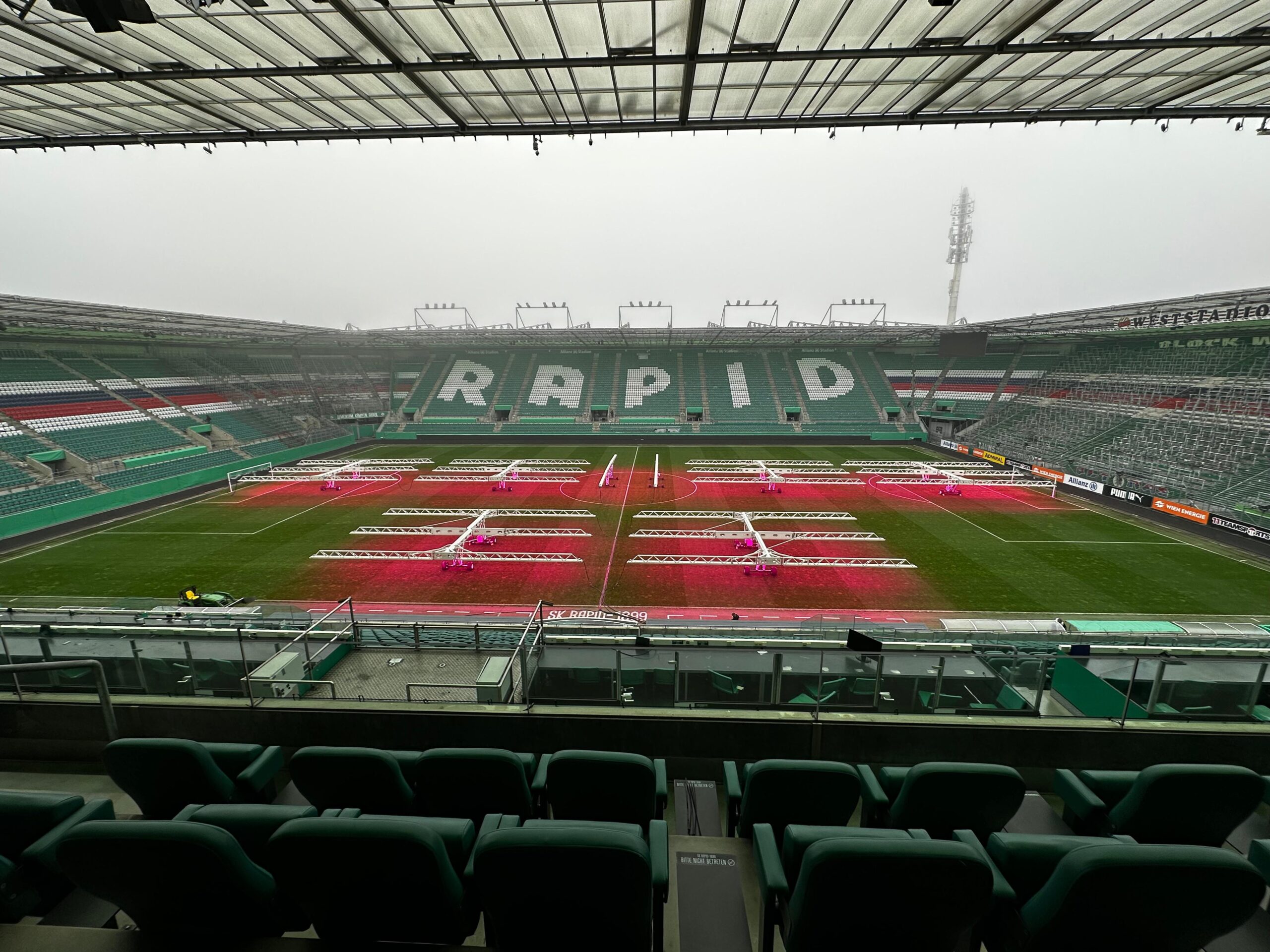
That mindset led to a growing interest in LED grow lighting. The club first installed HPS rigs in 2017, using them extensively. But with the technology nearing the end of its production cycle and efficiency demands increasing, a strategic choice became inevitable.
“When we realised we had to relamp every rig, the question was simple: invest in the old technology again, or take the step forward?” Johannes explains. “LED is where the football world is heading. The old lights will no longer be produced in 2027. Doing it now, under good conditions and with fair prices, made complete sense.”
A strategic investment
For Johannes, choosing LED is not only about quality. It is also about timing, economics, and sustainability. “These decisions involve significant amounts of money,” he says. “As Stadium Manager, I have to explain to the CEO and the board why we invest, how we spend the money, and how we get it back.”
The cost-benefit analysis proved compelling. Energy prices are unpredictable, the club was still able to secure a return for its old rigs, and LED technology offers a level of efficiency that fits Rapid Wien’s broader sustainability goals. “We have switched every flat light at the club to LED already. We want to be energy-efficient in every part of our operation. The rigs are no exception.”
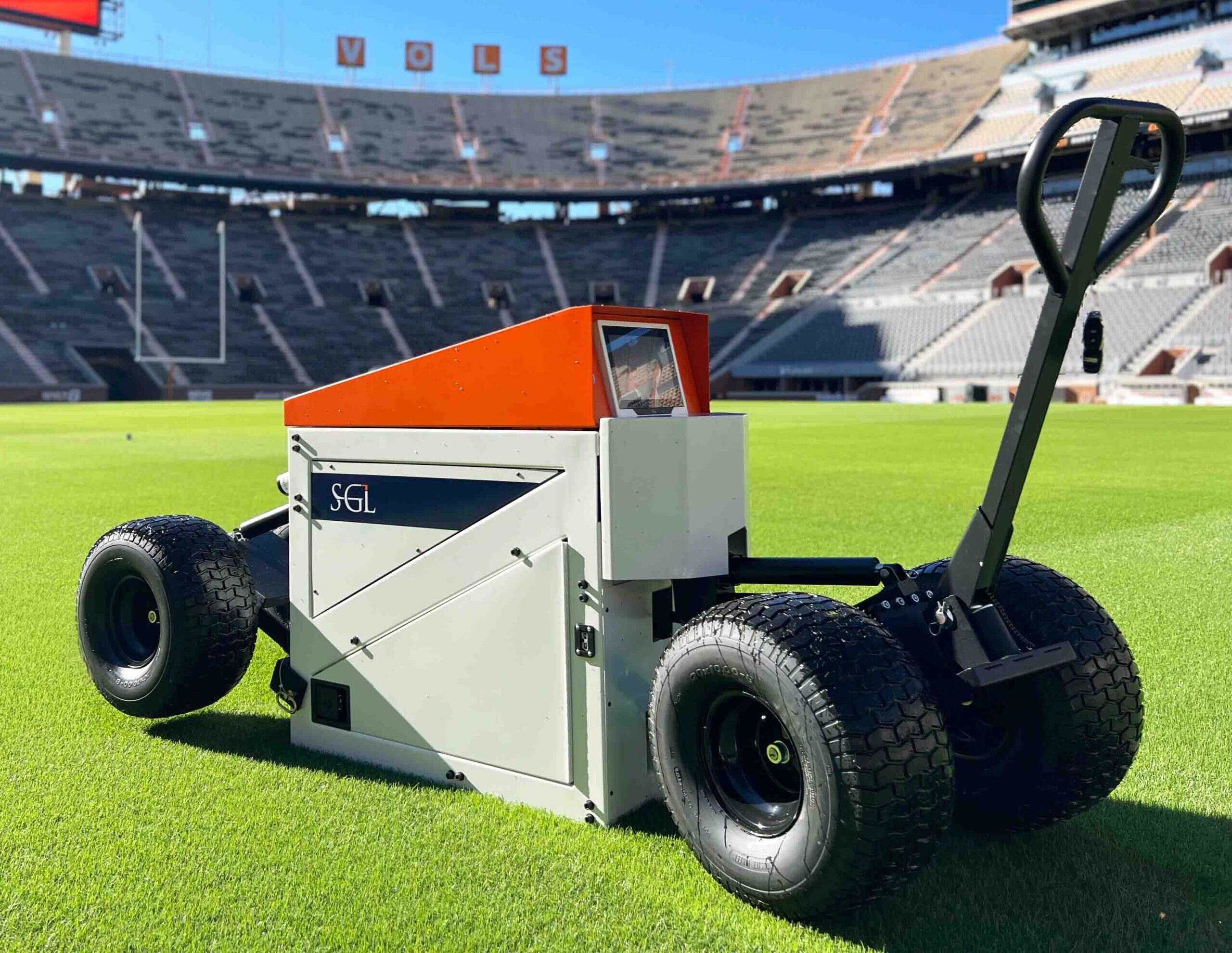
LED also allows the club to work more intelligently with data. Together with SGL’s TurfPods and TurfBase platform, the grounds team can monitor key parameters and make informed decisions. “We want to do greenkeeping in a data-driven way. That is the future. For me, the combination of LED and data is the most efficient path forward.”
Trusting the experts
Although Johannes takes a hands-on interest in greenkeeping topics, he leaves the final decisions to the specialists. “Wayne, our Head Greenkeeper, is one of the most important people at the entire club. Without a good pitch, you cannot play good football. It is the foundation for everything.”
The club’s greenkeeping team covers both the Allianz Stadion and the training grounds, with staff distributed across several natural and artificial pitches. The collaboration between management and groundskeeping is close and continuous. “We talk every day,” Johannes says. “I want to understand what we do. But the decision is always with the groundskeeper. That’s how it should be.”
At the same time, he sees it as his responsibility to translate technical needs into strategic decisions. “Groundsmen speak from their own expertise, which is good. But when it comes to investment, someone needs to explain the broader picture to management. That is where I come in. You need both perspectives to make the right choices.”
“For me, the pitch is one of the most crucial parts of the entire club. If it performs, the team can perform. My job is to make sure that our people have the tools they need, that we make smart decisions at the right time, and that the club benefits in the long run.”
Sustainability with purpose
Rapid Wien places strong emphasis on sustainability, and the move to LED fits neatly into that philosophy. But Johannes insists that sustainability must go hand in hand with quality and financial logic. “It’s always about balance,” he says. “You have to invest to become more efficient. When the deprecation period is short, and the quality improves, it becomes an easy decision.”
The club kept the same configuration as before: six large rigs and two smaller ones, providing the flexibility needed to cover key areas of the pitch. “This setup worked for us in the past, so we continued with it. With LED, we can achieve the same coverage but at a much higher efficiency level.”

Learning and sharing
Johannes is an active participant in SGL’s events and took part in the panel session at the Stuttgart Showcase. For him, those gatherings offer invaluable opportunities.
“It’s one of the most important parts of my job,” he says. “Meeting people from all over the world, hearing how they work, discussing new strategies. It helps us see things from a different angle. I have visited Chelsea, Stuttgart, Solna, many places. I’ve been preparing this topic for two years, and these exchanges have helped enormously.”
At the upcoming Masterclass, Johannes will once again be one of the few stadium manager s in a room filled with groundskeepers. It does not bother him. “It’s always funny when people ask why I’m there,” he says with a smile. “But I take the decisions for this topic at the club. It’s essential for me to understand it deeply.”
A club ready for the future
With the shift to LED, the integration of data-based tools, and a clear strategic focus, Rapid Wien is strengthening its foundation for the years ahead. Johannes plays a central role in shaping that course.
“For me, the pitch is one of the most crucial parts of the entire club,” he concludes. “If it performs, the team can perform. My job is to make sure that our people have the tools they need, that we make smart decisions at the right time, and that the club benefits in the long run. This investment is a major step forward, and I am proud we made it.”
Recent updates
Check out our latest updates